FUEL & HYDRATION: WHERE MOST PEOPLE GET IT WRONG
Water and food are where good days turn bad—or stay good.
Most people bring just enough.
Experienced hikers bring extra.
For hydration:
- A 3-liter system covers most hikes
- It’s helpful to carry a liter of electrolytes but do not mix into your clean reservoir water
- Drinking consistently matters more than waiting until you’re thirsty
- If there is reliable water on your route bring a water filter to refill as needed
For food:
- Energy bars, trail mix, nuts, dried fruit
- Simple, calorie-dense, easy to eat lunch
- Electrolyte/Energy gels or gummies with caffeine and simple sugar can be very helpful
- Bring enough extra so that you don’t run out of calories if you have to spend the night.
👉 Pro Tip:
You don’t pack for the plan—you pack for when the plan changes.
If a hike runs long, someone slows down, or conditions shift, having more than you think you need becomes critical. Depending on the length and difficulty level of the hike you will burn far more calories than you realize. And keep in mind that clean water in your reservoir is also useful for wound irrigation or to share with others who may run out.
LAYERS & SUN: THE SLOW VARIABLES
The trail temperature rarely matches the parking lot.
Temperature shifts as elevation rises. Wind picks up. Shade disappears.
Instead of thinking in outfits, think in layers:
- A moisture-wicking base
- A warm layer (even if you think you won’t need it)
- A light outer layer especially important for exposed summits
- Brightly colored clothing will help you stand out compared to your surroundings should you need help
Sun protection is just as important:
- Wide brim hat
- Sunglasses with UV protection
- Sunscreen
- Lightweight sun shirt or hoodie with 50SPF protection
👉 Trail insight:
Sun exposure and temperature don’t hit all at once, they build slowly, and by the time you feel it, you’re already behind. Depending on the relative humidity, the temperature drops from 3-5 degrees per 1k feet of elevation gain. So plan your layers for all segments of the hike. If you are delayed, temperatures can drop quickly when the sun goes down, especially in a low humidity environment so plan to keep your core warm in case you need to go with ‘plan b’.
STABILITY & MOVEMENT: USING YOUR WHOLE BODY
Hiking poles are one of the most underrated pieces of gear.
They:
- Reduce strain on your knees by up to 25% (especially downhill)
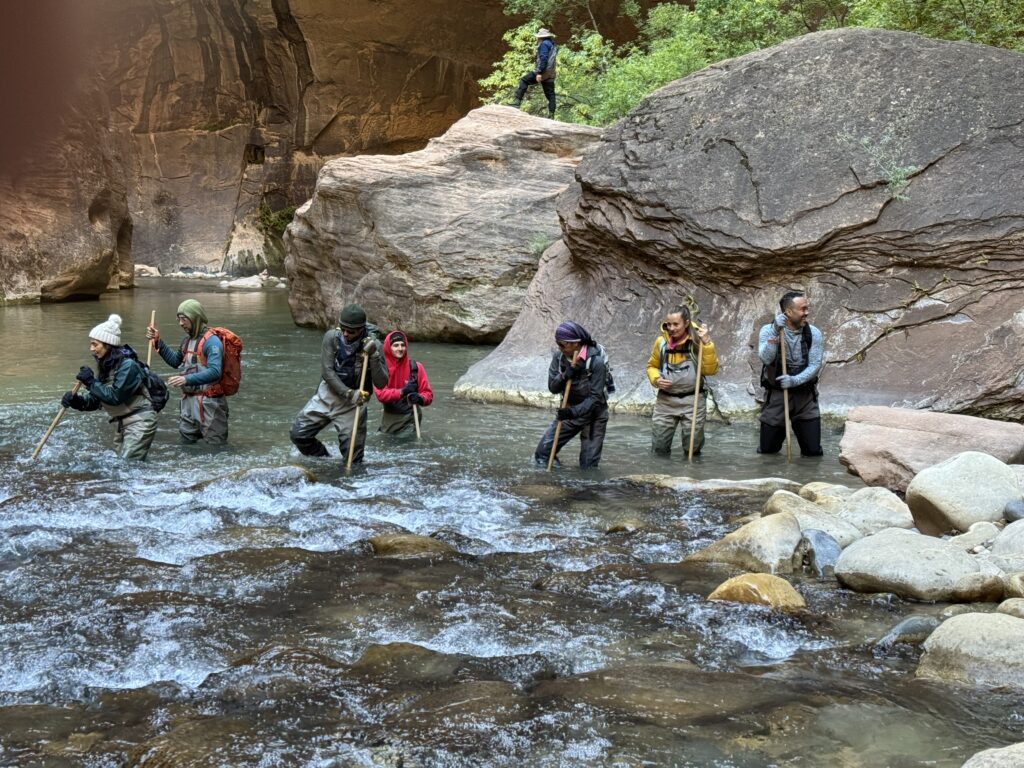
- Improve balance on uneven terrain, loose descents and stream crossings
- Help you move more efficiently over distance especially with a heavy load
👉 Where they matter most:
- Long or steep descents
- Loose or rocky terrain
- Stream crossings
They’re not required, but once you use them consistently, they become part of how you move. On longer hikes poles help you move more efficiently by helping to set your rhythm and getting your whole body involved in the movement not just your legs.